Spotlight on Chef Craig Emmons, WAC's Senior R&D Chef: Supertaster and Culinary Lifer
November 6th, 2026On How Staying Scrappy in the Kitchen Keeps Things Interesting
Every time you pull a portion of Teriyaki Salmon from the freezer or crisp up a batch of Pacific Cod Cakes, there’s a recipe behind it — and a very talented person behind that recipe. That person is Chef Craig Emmons, Wild Alaskan Company’s Senior Research and Development Chef.
Chef Craig grew up in the Pacific Northwest, went to culinary school, and spent years running restaurant kitchens before he started working in research and development for a number of years. We’re so happy that these experiences led him to work with Wild Alaskan Company, where he is constantly developing more delicious and convenient ways for you to enjoy wild-caught seafood in your own kitchens. He’s also a supertaster who plays a key role in deciding which supporting ingredients we bring into the WAC kitchen — items like the grass-fed butter for the Lemon Herb Halibut or the single-origin spices that give so much flavor to the Taco Seasoned Wild Alaska Pollock Quick Cuts.
The content team recently sat down with Chef to talk about what that work looks like, and why the freezer changes everything. I hope it gives you a peek behind the scenes that gets you hungry for your next wild-caught seafood meal.
***
What shapes the way you develop recipes?
I love introducing foods and flavors to people who think they don’t like something, and finding a way for them to like it. That goes back to culinary school. There was a chef I looked up to, and to this day he’s the reason I am where I am. He’s the one who convinced me not to leave school. One day in class, I said, “Ugh, I don’t like mushrooms.” He was six-foot-four, with hands like two bunches of bananas, and he got about two inches from my face and said, “You don’t like mushrooms because you haven’t had them done right. Come with me.”
He sautéed some mushrooms perfectly and finished them with a tiny splash of cream, some parsley, salt and pepper. Nothing off the wall, but cooked so beautifully that I’ve loved mushrooms ever since.
That became my approach. My mom used to make terrible French toast, so for the longest time I thought I didn’t like French toast. Years later, a restaurant asked me to design one for their breakfast menu, and the restaurant ended up getting recognized for its breakfast, French toast included. People asked how I came up with it, and I’d say, “I don’t like French toast, so I developed it until I did.”
How does R&D compare to cooking in a restaurant?
There are definitely similarities. At Wild Alaskan Company, we have to stay scrappy — staying scrappy is one of the company values — and that’s very much restaurant life. The hardest part about R&D is that a lot of the time there’s no instant gratification. In a restaurant, you make something, put it on a plate, and send it out. You know what it tastes like, and it goes to the guest immediately.
With R&D, you’re watching how something behaves over a week, two weeks, a month in the freezer. You might know right away what your initial recipe tastes like, but then you have to wait and see what happens to it over time. Working with frozen food has been a unique challenge for me, because freezing affects flavors a lot more than you realize. So we’ve built that into our testing, to give ourselves more time to make adjustments instead of shooting from the hip.
I don’t mind shooting from the hip. You can’t work in restaurants without doing it. But I’ve learned that patience and perseverance produce better products. It’s not just about what tastes good now. It’s about what’s going to taste good when a member is actually ready to cook it.
You once preferred fresh fish to frozen. How has your view changed?
When I started my career, “individually quick frozen fish,” or IQF, wasn’t as common as it is now. A lot of the frozen fish you got had ice buildup and was frozen badly, so frozen fish earned a bad reputation. Back then, I wouldn’t have used frozen fish if you’d forced me to. But my problem was never really with freezing. It was with where the fish came from and its quality.
When I first started working with Wild Alaskan Company, they sent me a box of everything to taste and write notes on. I remember thinking it was as good as the fish I used to get when I was living in the Pacific Northwest. When fish is frozen that soon after it’s caught, you capture all that flavor, and it doesn’t have time to break down. Back when I had a restaurant, fishermen used to pack fish on ice and be out on the boat for a week. The technology has come leaps and bounds just in my lifetime.
People say the public knows so much more about food now. I’d say the public has so much more information available, should they decide to look into it. A lot of people still say, “Ew, frozen.” I’ll ask, “Is it IQF, or is it just frozen?” And they’ll say, “What’s the difference?” It’s a huge difference.
What does it take for a new ingredient to make it into one of our products, beyond tasting good?
Most ingredients don’t make it past the first step. An ingredient’s label will look clean — meaning the product is free of any elements that are on our banned ingredient list, but we don’t stop there. Our food safety and quality assurance team runs a background check on every company and looks for any claims made against it.
Then there’s taste. Once, I was sent three products that all passed the rigorous food safety standards that we have. I tried them all — and they were all bad. We’d been so excited, too. Sometimes, we’ll get spice samples where I’ll think, “I wouldn’t serve this to people I don’t like.”
After that comes durability and function. When something goes into production, I try to make it as easy, durable, and simple as possible. Simplicity reduces errors and the risk of inconsistencies, ensuring that the product tastes the same from batch to batch.
Then there’s what I call torture testing. Does the product hold up to freezing? To thawing? How can it be cooked? That’s why some of our products say not to cook them from frozen, and why one package lists broil, oven-fry and bake while another lists only bake and oven-fry. Not everything works well for everything, so we try to be as intentional as we can with cooking instructions.
Are there any new ingredients you’re excited about?
We just brought in a new organic coconut milk. It was actually my second choice, because the first one didn’t work out for us. But the one we chose turned out to be more durable, so that worked in our favor.
I’m also excited about some of the dairy products we’ve found, including a grass-fed, organic cottage cheese. Cottage cheese is a hot ingredient right now, and you can turn it into all kinds of sauces. For example, just out of my own curiosity, I made a tzatziki with cottage cheese at home. It was excellent! I can’t say how I’m thinking about using it yet for Wild Alaskan Company, but I’m excited to see what we can do. Finding products that meet our requirements has been the biggest challenge, and also the biggest triumph.
If you could make any dream seafood product for Wild Alaskan Company, what would it be?
At one of my restaurants, I used to make a Southwest lobster bisque. You roast poblanos, peel them, and purée them into the broth, so it has this beautiful rich green color. Then there’s a splash of sherry, like any bisque, plus some different spices. The lobster goes in, and it’s topped with a roasted corn and poblano salsa. I’ve been wondering what it would taste like with our crab, maybe some Dungeness or snow crab.
At my restaurant, I had a locked cage in my walk-in refrigerator for expensive items, and every time I made that soup, I had to lock it up. I kept catching servers walking by with spoons in their pockets. I’d go in and say, “Where’s my soup? Half of it’s gone. This is our whole special for the week!” I always figured that was a good review of the recipe.
You’ve been in kitchens a long time. What keeps it interesting?
The more you learn, the more you learn what you don’t know. Just when you think you have a good grasp on something, someone points something out and you’re starting over. That’s why I’ve stayed in culinary for so long. It’s constantly changing, and there’s always something new to learn. I’ve even tried to leave, and I can’t get away from it. I’m a lifer.
My dad worked in computer programming, back in the punch-card days, and he instilled in us that you learn until the day you die. The moment you stop learning, you’re done. So my wife and I will go to a food festival or a grocery store, and I’ll just start buying random stuff. She’ll ask what it’s for, and I’ll say, “I don’t know. I’ve never eaten it. I’ve got to know what it is.” There’s so much out there, and there’s never enough time in the day to try it all.
***
Thank you, Craig, for all the care you put into what lands on our members’ plates. Looking forward to seeing what you’re cooking up for WAC next!
Live Wild,
Monica
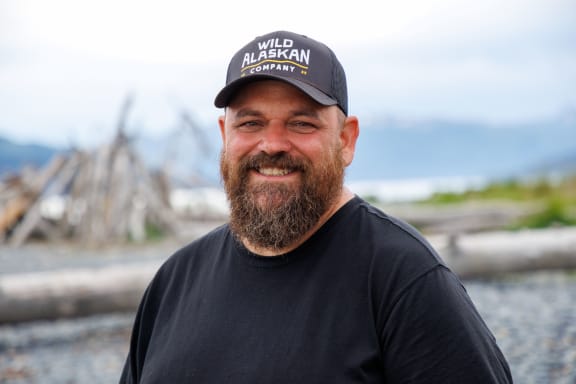
Pictured above: A portrait of Chef Craig Emmons on a rocky beach in Homer, Alaska, captured this past summer at the company gathering.