On Bears and How They Lean Into Alaskan Winters
November 26th, 2026A Warm Wish of Gratitude as the Year Winds Down
Until I married into an Alaskan fishing family over a decade ago, I can honestly say that an awareness of bears had not been on my bingo card. But now that Alaska is a critical part of my life, well…so, too, are bears! We’ve spotted them on hikes in Homer, Alaska, during the summers, but they likely won’t be out and about until after the “break-up” in April or May — that northerly season when the snow-covered ground beneath our feet thaws into a springtime mudscape.
I’ve learned that at this point in the year, most of the brown bears in Alaska are snuggled into a cozy den in which they’ll “hibernate” ‘til spring. Technically speaking, they don’t enter true hibernation as some other animals do in Alaska — this means you can still wake a bear in winter, if you tread too close to its den. The den usually looks something like a hole or hollow, a modest bear bungalow that they dig into the ground with their front paws and claws.
There’s often a “porch” marking the entrance, a collection of earth and vegetation that piled up in the process of excavation, but often not much else in terms of decor or creature comforts. Occasionally a soft bed of evergreen branches, but certainly no stash of snacks or even a source of water. Everything that the bear really needs is within — a store of fat from summer feasts, a warm layer of fur, and an evolutionary blueprint etched deep in their bones.
While many of us are shuttling back and forth from holiday gatherings or indulging in recipe rotations full of comfort food, the bear is taking a long sleep, preserving its energy for warmer, brighter days. It’s an annual rhythm that allows them to survive a long winter of darkness, cold temperatures, and an absence of resources. Despite its hibernal pause, the bear is so well-prepared that come midwinter, a mother bear has the strength to give birth to her cubs in the den. She has enough energy to nurse her litter so that they emerge in the spring as a new generation of family, just in time for them to enjoy an omnivorous diet of winter carrion and spring greens as they learn the ropes of being a bear.
With family on the mind for many of us today, I’ll leave you with a warm wish of gratitude as you either gear up for your own feasts or wind down for winter in your own way.
Live Wild,
Monica
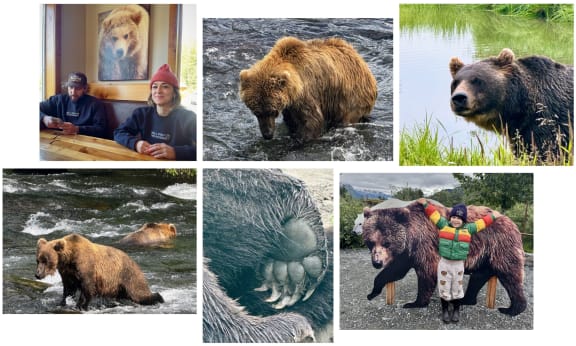
Pictured above: A smattering of bears in Alaska, along with a portrait of me and Papa Bear (my husband Arron, WAC founder + CEO) and our little cub this past summer.