The Differences Between Atlantic Salmon vs Sockeye Salmon
September 18th, 2026Comparing Wild Sockeye vs Atlantic Salmon
There are key differences between Atlantic salmon vs sockeye salmon that give each species its own nutritional profile, flavor, and appearance. Those qualities are a direct result of how and where each fish spends its life — one in a vast marine ecosystem, the other in a net pen.
Sockeye salmon is a wild-caught Pacific species, Oncorhynchus nerka, also known as red salmon, with habitats ranging from Alaska south to the Pacific Northwest. Wild sockeye swim thousands of miles over a lifetime in an epic hunt for food, feeding on krill, zooplankton, and small fish. If you want the full picture of the species — its life cycle, its range, and why Bristol Bay matters — start with our guide to sockeye salmon.
Atlantic salmon is a different story. Any fish marketed as Atlantic salmon at a grocery store or restaurant is farm-raised. Wild Atlantic salmon are an endangered species, with limited habitats remaining in Maine and in Canadian tributaries of the North Atlantic, and they cannot be harvested by fishermen or sold in markets while scientists work to restore historical runs. As NOAA notes, only farm-raised Atlantic salmon are found in U.S. seafood markets — produced in aquaculture operations in Norway, Chile, Scotland, and Canada, and typically confined to net pens, often situated in polluted coastal waters, where they're fed engineered pellets that can never truly replace a wild diet. That single difference, wild ocean versus open-net pen, drives nearly everything else that follows: taste, color, fat profile, and environmental footprint.
Is sockeye salmon better than farmed Atlantic salmon?
Yes, when you compare the health impact and environmental effects of sockeye vs farmed Atlantic salmon. Sockeye from Alaska is rich with nutrients from the wild and is more flavorful than farmed Atlantic salmon.
Farmed Atlantic salmon is fed dye to resemble wild salmon, but it's much less flavorful. More importantly, farmed Atlantic salmon can carry contaminants that affect your health, and the practices at a typical salmon farm contaminate surrounding ecosystems and create competition for resources between farmed salmon and wild species.
Taste and Texture
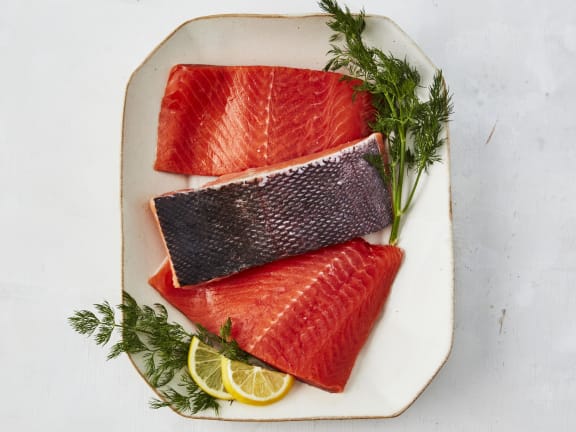
Sockeye is one of the boldest species of wild salmon, in both texture and flavor. It has a salmon-forward flavor that stands on its own or holds up against intense seasoning, and a meaty, dense quality despite being quite lean. If you've never tasted sockeye before, the first bite tends to be a pleasant surprise.
Farmed Atlantic salmon doesn't pack the same punch. It is significantly milder, and much higher in fat, which gives it a softer, more uniform texture. That fat comes from a diet of engineered pellets, typically built from soy and corn and supplemented with fish oils — never enough to match the fat ratios of a wild diet. Farmed Atlantic salmon end up with an overabundance of omega-6 fatty acids, which is unnatural for the species.
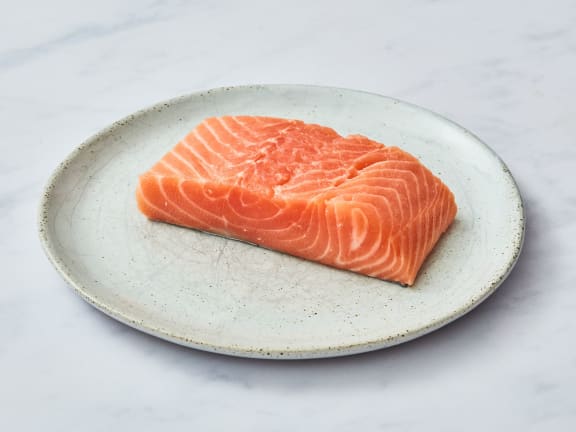
The fat difference also changes how each fish behaves in a pan. Leaner wild sockeye cooks faster than farmed Atlantic salmon, which matters because most recipes treat farmed Atlantic as the default and set cook times accordingly. Expect to pull sockeye earlier than a recipe tells you to. For cook times built around wild fish, explore our wild salmon recipes, sharpen your wild salmon cooking skills, or check the recommended internal cook temperatures for wild species.
Appearance and Color
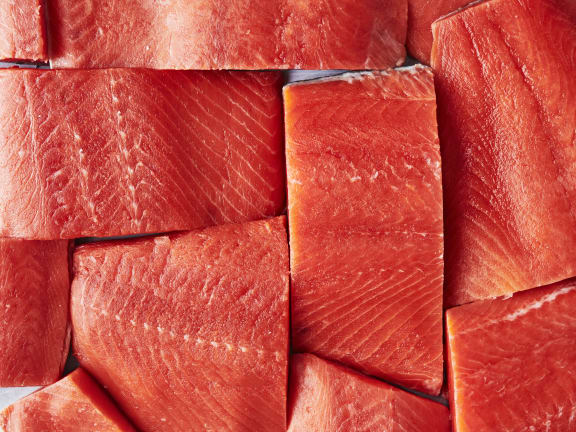
Put a sockeye fillet next to a farmed Atlantic fillet and the color difference is immediate. Sockeye runs a vivid red; farmed Atlantic runs pale pink to orange. Both colors come from the same carotenoid — astaxanthin — but the fish get it in very different ways.
Wild sockeye develop their color naturally from a diet of shrimp, krill, and zooplankton, all abundant sources of astaxanthin. Of all the Pacific salmon species, sockeye has the boldest flesh color, because its diet is primarily zooplankton. Other Pacific species eat more small fish and less krill, so they land in subtler shades of pink and orange.
Farmed Atlantic salmon get their color from feed enhanced with dyes. Because the feed is primarily corn and soy, astaxanthin has to be added — and some farms use a synthetically derived version — to ensure the fish look pink enough by the time they reach market. Without it, farmed Atlantic salmon would be gray, which isn't marketable to consumers, because we wouldn't recognize those fillets as salmon at all. Farmers select the target hue in advance using a color wheel when they buy feed.
Environmental Impact of Atlantic Salmon vs. Sockeye Salmon
Atlantic salmon farms are not self-contained. Rather than taking pressure off wild salmon, they put stress on wild fish populations.
Conventional salmon farms introduce pollution, pathogens, and toxic waste into their surrounding environments. The chemicals used in pens to control disease outbreaks leak into the ocean and affect fish and other species in surrounding areas. The antibiotics used to fight off disease have contributed to antibiotic-resistant diseases and parasites in the wild. When the omega-3 supplementation in salmon feed is derived from wild forage fish, farmed Atlantic salmon are pitted against wild species in a competition for resources, and the corn and soy in that feed may be sourced from industrial farms that pollute and dilute vital resources for other ecosystems.
The risks aren't theoretical. The implosion of a net pen in Puget Sound in 2017 finally prompted the state government to ban Atlantic salmon farming in state-owned waters. Finfish farming in the open seas is problematic enough that it's also banned in Alaska, Oregon, and California.
Sockeye thrive in the wild and don't need antibiotics or artificial feed to stay healthy. As a keystone species, they're integral to the health of their ecosystems, playing a key part in an intricate food web designed by nature. When sockeye are harvested from well-managed wild fisheries like Alaska's, wild populations remain healthy and abundant season to season, and critical marine habitats stay protected. Well-managed wild fisheries can even help overfished populations recover and sustain themselves into the future.
Where to Buy Wild Sockeye Salmon Online
Wild Alaskan Company is a trusted source for wild-caught salmon, offering fillets of wild sockeye and coho that are flash-frozen shortly after harvest, processed while frozen, and shipped frozen to your doorstep. Choose your salmon subscription box today.
Consider sharing the gift of wild salmon with friends and family. Sending the gift of Alaskan seafood to your loved ones is a thoughtful way to show you care.
Frequently Asked Questions
Is Atlantic salmon dyed?
Effectively, yes. Farmed Atlantic salmon are fed astaxanthin, a carotenoid, because their corn-and-soy feed doesn't provide it naturally. Some farms use a synthetically derived version. Without it, the fillets would be gray rather than pink.
Is Atlantic salmon ever wild-caught?
Not commercially. Wild Atlantic salmon are endangered and cannot be harvested or sold, so anything labeled Atlantic salmon at market is farm-raised.
Which is healthier, Atlantic or sockeye salmon?
Sockeye. It's leaner, higher in omega-3s relative to omega-6s, naturally rich in astaxanthin, and — when harvested from Alaska — low in contaminants.
Can I use sockeye in a recipe written for Atlantic salmon?
Yes, with one adjustment: reduce the cook time. Sockeye is leaner and cooks faster, so a recipe calibrated to farmed Atlantic salmon will overcook it.
Which one is more sustainable?
Wild sockeye from well-managed Alaskan fisheries. Open-net Atlantic salmon farming introduces pollution, pathogens, and antibiotics into surrounding waters, and is banned outright in Alaska, Washington, Oregon, and California.