What Is Sushi-Grade Salmon? What the Label Really Means
November 13th, 2026"Sushi-Grade" Is a Marketing Term, Not a Regulated Standard
Walk the seafood aisle or scroll any fish retailer’s site and you’ll see it everywhere: “sushi-grade salmon.” It sounds official, like a stamp from an inspector who checked the fish and cleared it for your sashimi platter. It isn’t. Here’s what the label actually means, what really makes salmon safer to eat raw, and why the way your fish was frozen tells you far more than any sticker can.
What does “sushi grade” mean?
“Sushi grade” isn’t an official grade. It’s a label sellers use to claim that a fish is high quality and was handled in a way meant for raw eating. Because no agency regulates the term, the best way to know what you’re getting is to ask how the fish was frozen and stored.
The FDA sets food safety guidance for seafood, but it has never issued “sushi grade” or “sashimi grade” designation, and no inspector signs off on it. When a seller uses the phrase, they’re making their own claim about their own fish, which means it's fully up to their interpretation and discretion.
That’s worth knowing, because the label does not confirm anything about how the fish was handled.
Why Freezing Matters More Than the Label
Eating wild fish raw that was never frozen properly can make you sick.
For example, wild salmon spend their lives moving between rivers and the open ocean, feeding across a wide food web, and they naturally encounter parasites along the way. Parasites are a normal part of any healthy wild ecosystem, and they don’t harm the fish. The concern is for people, who can become sick from the parasites.
That’s a big part of why salmon wasn’t traditionally a fish that was prepared as sushi or sashimi, despite wild salmon being a traditional protein option in Japan. Salmon only became a popular choice for sushi when farmed Atlantic salmon from Norway expanded its reach into Japan through marketing campaigns.
According to the FDA’s seafood safety guidance, freezing kills parasites in fish meant for raw consumption when it meets specific conditions, including:
- Freezing and storing at -4°F (-20°C) or below for 7 days total, or
- Freezing at -31°F (-35°C) or below until solid, then storing at -31°F or below for 15 hours
Those temperatures matter. Most home freezers are set to about 0°F, which is great for storage but not cold enough to meet the FDA’s 7-day standard. Parasite destruction is a job for commercial freezers, done before the fish ever reaches you.
All seafood from Wild Alaskan Company is frozen promptly after harvest to eliminate the risk of parasites and preserve peak freshness and quality. That’s why you won’t see a “sushi-grade” sticker on it. A label can’t tell you much. How the fish was caught, frozen, and stored can.
The “fresh, never frozen” myth
For most cooking, “fresh, never frozen” sounds like the premium choice. For raw fish, it’s the riskier one. Wild fish that has never been frozen hasn’t gone through the one step that kills parasites, no matter how recently it was caught or how good it looks in the case.
One important caveat: in terms of food safety, proper freezing handles parasites — and that’s all it handles. It doesn’t eliminate bacteria or other foodborne pathogens, which is why careful thawing, cold handling, and clean prep still matter, and why cooking remains the safest way to eat any seafood.
Can you eat frozen wild salmon raw?
Wild salmon that has been frozen under specific, controlled conditions is generally safer to eat raw than salmon that was never frozen, because that process of freezing is designed to kill parasites. Still, there’s no way to recommend raw salmon as completely safe. Any raw protein, including salmon, carries the risk of foodborne illness. The safest way to enjoy salmon is fully cooked to the FDA-recommended internal temperature of 145°F. If you’re pregnant, immunocompromised, or otherwise need to limit foodborne risk, skip raw or undercooked fish entirely.
If you’re curious about how freezing affects quality, read more about fresh vs. frozen fish. For the best results with any frozen fillet, here’s how to defrost salmon the right way. And for a deeper look at the risks, see Can You Eat Raw Salmon?
Ways to Enjoy Salmon
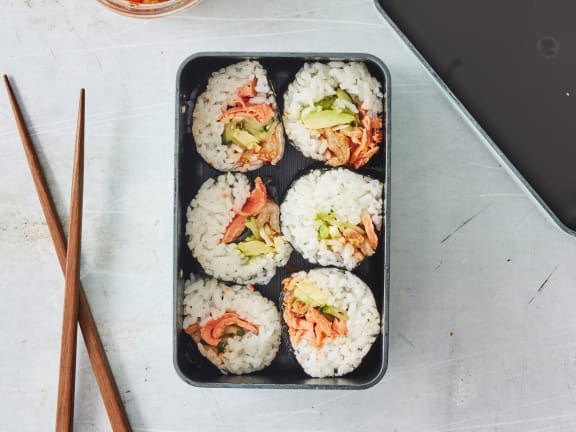
If what you love about sushi is the combination of rich salmon, seasoned rice, and seaweed, you can get all of that from fully cooked fish.
Spicy salmon sushi bake. Everything you crave in a spicy salmon roll, served as a hot casserole. Baked wild salmon is flaked with cream cheese, Japanese-style mayo, and chili sauce, then layered over seasoned rice with furikake and baked again. Top it with avocado and scoop it up with roasted seaweed. Try the Spicy Salmon Sushi Bake for One.
Seared salmon with Japanese-inspired ingredients. A quick, hot sear gives you a crisp, golden exterior with a tender center. For the safest result, cook it through to 145°F, then flake and serve over rice with soy, scallions, and pickled ginger for a sushi-bar feel.
Flaked salmon rice bowl. This salmon rice bowl recipe dresses cooked, flaked salmon in a zesty ginger poke-style sauce that transforms any leftover salmon fillets into a punchy topping. Make the Ginger-Lime Flaked Salmon Bowl.
Want wild salmon that’s frozen within hours of harvest and delivered straight to your door? See how Wild Alaskan Company works.
FAQ
Is sushi-grade salmon safe to eat raw?
Not necessarily. “Sushi grade” is a seller’s claim, not a safety certification. Wild salmon that was frozen under FDA-recommended conditions is generally safer to eat raw than salmon that wasn’t, but no raw salmon is risk-free. The same risk applies to any raw protein, whether we're talking about seafood, poultry, or meat. Cooking salmon to 145°F is the safest option.
What’s the difference between sushi-grade and regular salmon?
There’s no official difference. “Sushi grade” is a marketing label that usually signals the seller considers the fish high quality and handled for raw eating, often including freezing to kill parasites. However, no agency defines or inspects for it.
Does freezing salmon kill parasites?
Yes, when it’s done under specific conditions. The FDA’s guidance calls for freezing and storing at -4°F or below for 7 days, or freezing at -31°F or below until solid and storing at that temperature for 15 hours. Most home freezers don’t get that cold. Freezing doesn’t kill bacteria or other pathogens.
How do I know if salmon is sushi grade?
You can’t, because there’s no official sushi grade to check for. The term is each seller’s own claim. What you can check is how the fish was handled: ask whether it was frozen, at what temperature and for how long, and how it was stored and thawed afterward. Those answers tell you more about a fish than any label.
Is “sashimi grade” the same as “sushi grade”?
Both are unregulated marketing terms that sellers use interchangeably to suggest a fish is suitable for eating raw. Neither one is an official grade, and eating any fish raw presents the risk of foodborne illness.