Coho vs. Sockeye Salmon: Understanding the Difference
June 10th, 2024A Quick Breakdown of the Species' Nuances
Two popular types of wild Alaskan salmon, sockeye and coho salmon, both produce fillets with a vibrant shade of red-pink. They’re both healthy sources of protein with nutritional benefits you can’t easily find elsewhere. And perhaps most importantly, they’re both delicious.
But with all that they share in common, wild Alaskan sockeye and coho salmon have some key differences that we think you will want to understand when you’re choosing between which species of salmon you’ll be making for your next meal.
Here are the key differences between sockeye and coho salmon that we think you need to know:
Meet These Pacific Salmon
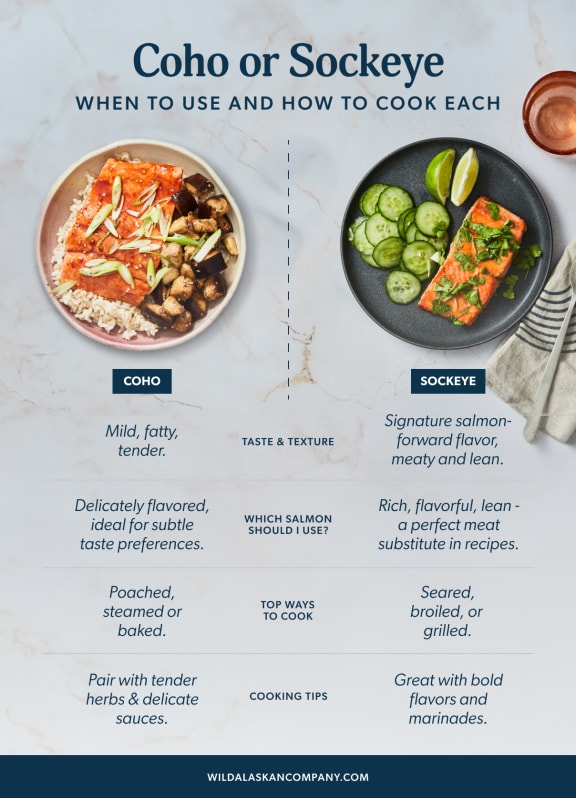
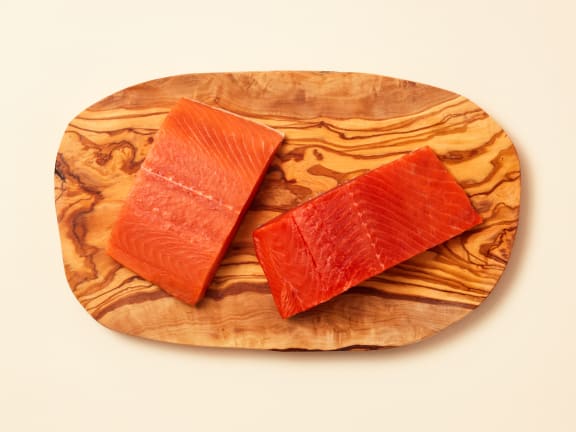
Sockeye, otherwise known as red salmon, earned this colorful nickname because its flesh is a vibrant, saturated red. This makes it the most photogenic of salmon, from a food photographer’s standpoint! Its distinctive color also makes it the easiest to identify, if you’re new to salmon or new to identifying fish fillets in general: When you see a fillet of richly-hued fish, you can bet your money that it is a fillet of wild sockeye.
Coho are called silver salmon because of their radiant, silvery skin; it’s perhaps not obvious when you’re looking at a coho on its own — but when you set all the species of wild Alaskan salmon side by side, coho skin shines bright like a diamond. Its flesh isn’t as deeply red as sockeye, but wild coho is still a robust red-orange.
Sockeye Salmon: The Carotenoid Superstar
When you take a closer look at sockeye versus coho, this is where the two species really begin to differentiate themselves as proteins.
Wild Alaskan sockeye’s striking red flesh is a reflection of its diet, one that’s high in nutritious algae and zooplankton — which include tiny crustaceans like krill — and gives it its signature color. This color is the direct result of an antioxidant compound called astaxanthin, a carotenoid that the salmon consume in their diet. Carotenoids are commonly found in red-orange foods like sweet potatoes, carrots, and squash. Whether these carotenoids are plant or fish based, the nutrition gets passed all the way up the food chain to us when we make them part of our meal.
In fact, all types of salmon get their pink-orange-red flesh because of this dietary component. Sockeye just happen to eat the most zooplankton of all. Generally, the redder the salmon, the more astaxanthin it contains. Coho tend to be more pink than red because they eat a little higher up on the food chain, consuming less zooplankton (therefore, less astaxanthin) over their lifespans.
Coho Salmon: Oh My, Omega-3s
Both wild sockeye and coho are considered fatty or oily fish, with coho being the leaner of the two. A 6 oz. portion of sockeye has about 15g of fat, while coho packs about 9g. (In comparison, lean white fish like Pacific cod or Pacific halibut contain about 1g of fat per 6 oz. serving; whereas a 6 oz. portion of 90/10 ground beef contains 18g of fat.)
Part of the fat content in coho and sockeye includes marine-based omega-3 fatty acids that may be underconsumed by the average person:
-
A 6 oz. portion of sockeye salmon contains 671mg DHA and 352mg EPA.
-
A 6 oz. portion of cocho salmon contains 836mg DHA and 242mg EPA.
A 2019 analysis published in Frontiers in Nutrition found that a vast majority of consumers surveyed were not eating enough oily fish, with different age groups representing different levels of underconsumption. But DHA and EPA are especially important components of brain health, making them essential fats for us while we’re in the womb, developing into adults, and maintaining health well into late adulthood.
By integrating wild Alaskan salmon into your diet, you’re getting your dose of EPA and DHA from a delicious meal, not from a pill produced from sources that may be less sutainable and be more difficult to trace.
Other Types of Alaskan Salmon at a Glance
Coho and sockeye salmon are popular wild-caught species, but you might be wondering about other Pacific salmon you've come across in restaurants in grocery stores:
-
Chinook salmon (aka king salmon): Generally the largest and known for its buttery texture.
-
Chum salmon (aka keta, dog salmon): The males develop canine-like teeth when they spawn, which explains the nickname "dog salmon." Chum are generally leaner than sockeye salmon.
-
Pink salmon (aka humpback or humpie): These are generally the smallest and leanest Pacific salmon. Males develop pronounced back humps during their spawning season, hence the "humpback" nickname. They're known for their soft, pink flesh. Pink salmon is most commonly used in canning.
- Copper river salmon: Several species of wild salmon can be harvested from Copper River fisheries, including chinook, coho, and sockeye.
When Flavor Dictates What’s for Dinner (or Breakfast or Lunch…)
Sockeye salmon has a robust “salmon” flavor that makes it a great choice when you’re looking for it to stand out in especially bold preparations. Think spice rubs, charcoal grills, or a salty cure. Sockeye’s salmon-forward taste often makes it a sea-foodie’s first choice.
Coho is the milder of the two, making it a good “starter salmon” for picky seafood eaters or a more subtle option for delicate preparations. It takes well to gentler cooking methods and milder flavor profiles.
At Wild Alaskan Company, our seafood selection features wild-caught coho salmon as well as smoked sockeye salmon, Captain Cuts, and 6 oz. portions.
Buy salmon online through a Wild Alaskan Company membership to see how we make seafood shopping easier and more convenient. And if you're ready to start cooking, explore our blog for even more cooking tips, recipes and meal ideas.