Fireweed as a Symbol of Abundance and Impermanence
September 3rd, 2026On One of Alaska’s Most Iconic Wildflowers
For years, I assumed fireweed, one of Alaska’s most iconic wildflowers, got its name from the magenta intensity of its flowers — the way the brilliant blooms seem to spread across the landscape like a conflagration of color. Someone later told me that it wasn’t about the petals, but rather a nod to the leaves turning deep red closer to autumn after the blooms fade. But it turns out neither story is correct. Fireweed earned its name because it’s one of the very first plants to return after a wildfire, what’s known as a “pioneer species.”
If a flower could be described as having “grit,” it’d surely be fireweed, and I can’t help but think that’s part of why it feels so symbolic here in Alaska. It roots itself into landscapes scorched by wildfire and disturbed ground, pushing up through ash and charred soil where other life has not yet returned. What initially appears as devastated or emptied begins, slowly, to flourish again.
Fireweed is also a staunch keeper of time, a clock against which you could set your summer agenda. In July, I was at WAC’s buying station on the Kasilof River when I heard one of the team members who works at the dock say, “The fireweed is about to bloom, so the salmon should be here today or tomorrow,” as if the petals were getting ready to roll out a grand magenta carpet for the arrival of Alaska’s VIPs.
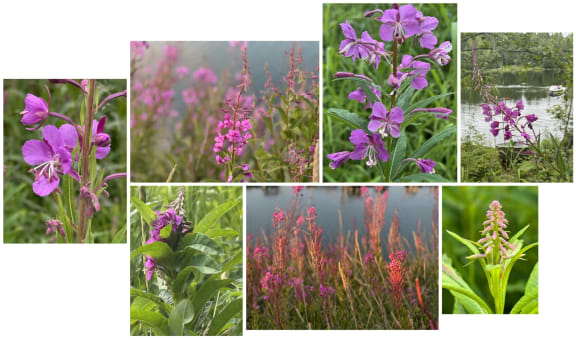
Fireweed blossoms open gradually from the bottom of the stalk on upward as the summer progresses. If you’re driving through Homer now, you’ll notice that the flowers have nearly reached the tops of the stalks, matching an end-of-the-season feeling that’s replaced the frenzy and bustle of summer. By the time the top bud blooms, it is said that winter is only six weeks away, something that’s always felt bittersweet to me. The wildflower somehow holds both truths at once: abundance and impermanence. Flourishing and surrender. Loss and return.
In Alaska, nature is never static. Ecosystems depend on cycles of disruption and renewal, of give and take, of seasons arriving and receding in infinite, cosmic cycles. Fireweed simply makes those rhythms visible and beautiful — and I, for one, am humbled and awed to be in the audience for a little while.
Live Wild,
Monica
Pictured above: A patchwork of fireweed’s magenta blossoms against a backdrop of lush greens and sparkling water.